
MoleGuard — Safe Disposal
Safe, Fast Dead Mole Removal
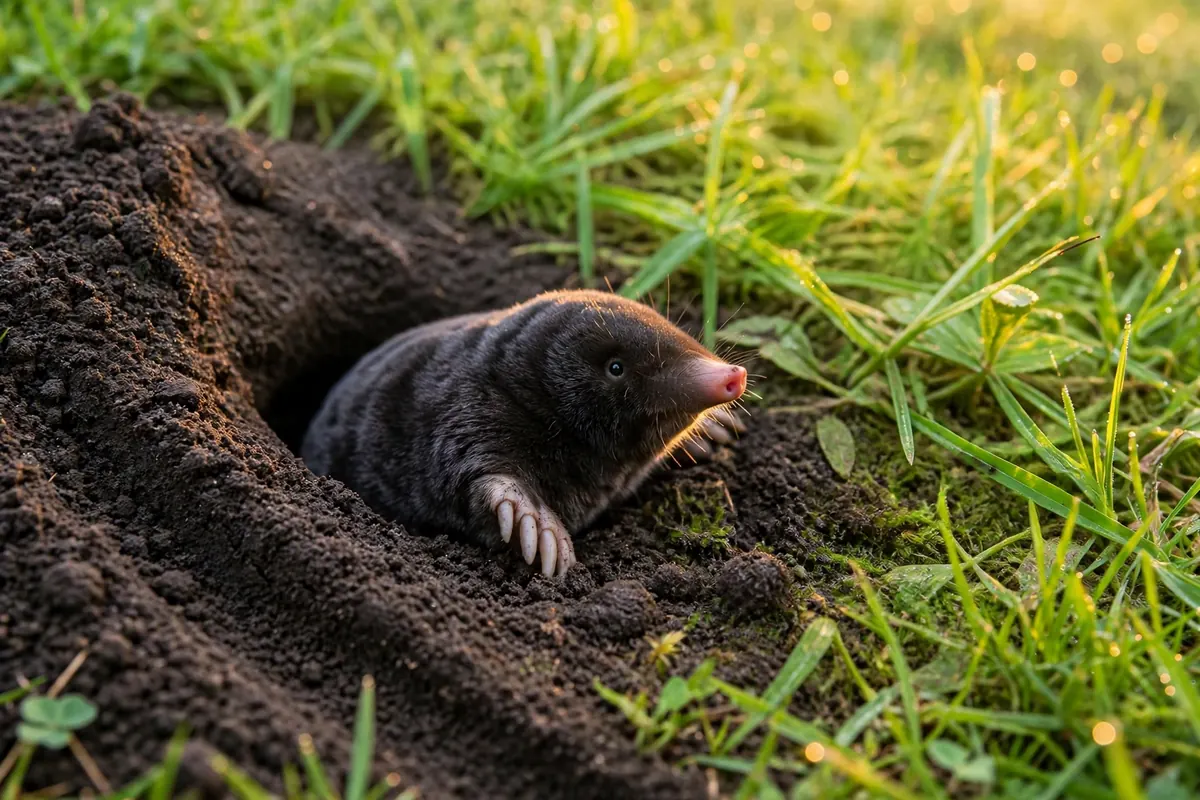
Found a dead mole in the yard? It happens more often than people think — and not always for obvious reasons. A mole caught in a neighbor's trap can die in a shared tunnel and surface in your yard. A cat or dog may have gotten one (cats are surprisingly effective mole hunters). Sometimes a mole just dies underground and decomposition gases push it to the surface through a tunnel. Whatever the cause, you want it gone quickly, and you probably don't want to handle it yourself.
Here's why prompt removal matters beyond the obvious unpleasantness. A dead mole in warm weather starts decomposing fast, and the smell draws flies and scavengers. Dogs, in particular, find dead moles fascinating — and a decomposing mole can carry parasites and bacteria you don't want your pet rolling in or chewing on. If the mole died from someone's bait product, secondary poisoning is a real concern for pets and wildlife that scavenge the carcass.
Safe, Fast Dead Mole Removal: Key Details
- What we do
We come out, locate the animal (dead moles have a way of being exactly where you don't want to reach), remove it with proper handling — gloves, sealed bag, no bare-hand contact — and dispose of it safely. Then we check the immediate area: if there's an active tunnel system, a dead mole often means there's a live one nearby, or was recently. We'll tell you honestly whether the yard needs a trapping assessment or whether this looks like a one-off.
- When a dead mole means a bigger problem
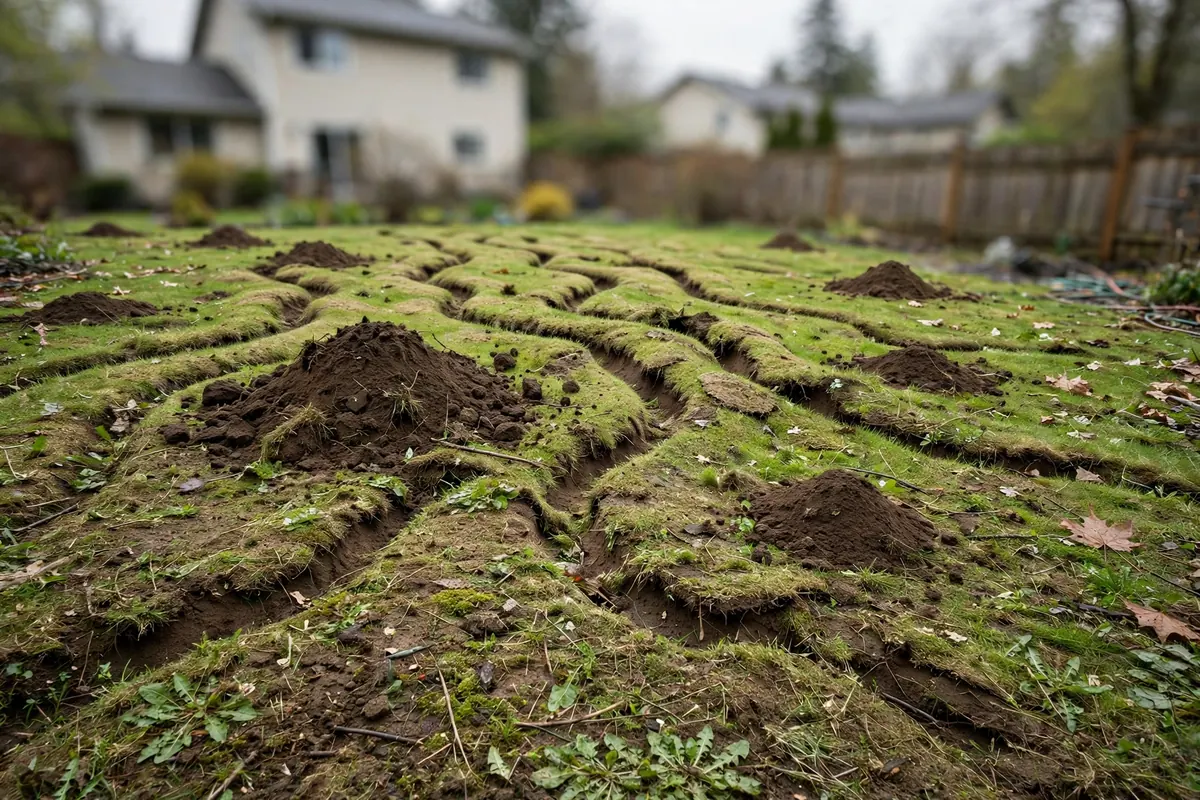
One dead mole on the lawn with no other sign? Probably a cat's trophy or a wanderer. But a dead mole plus fresh mounds, ridges, or tunnel activity means the system is occupied — the dead one isn't the one making the mess. In that case, removal is step one and trapping the live ones is step two. We'll read the sign while we're there and give you a straight answer.
There's one more scenario worth mentioning: if you're finding dead moles repeatedly, someone nearby may be using poison baits. Worm-mimic baits carry labels warning they're extremely toxic to mammals, birds, and other wildlife — and a poisoned mole doesn't always die where it ate the bait. If your dog is the type to pick things up on walks anywhere in our Post Falls service area, this is worth knowing about, and worth a conversation with us about what's happening in the neighborhood.
Dealing With Dead Mole Removal?
Call MoleGuard — tell us what you're seeing and we'll take it from there.
MoleGuard — Safe Disposal
Health, Pets, and Practical Concerns
Let's be direct about the health angle, because it's the reason most people call. Moles themselves aren't known as major disease vectors the way rats are. But any dead wild animal in your yard deserves caution: decomposition bacteria, parasites like fleas that leave the cooling body looking for a new host, and the general rule that you don't handle wildlife carcasses with bare hands. Gloves and a sealed bag, every time — or just call us and skip it entirely.

Health, Pets, and Practical Concerns: Key Details
- Dogs and dead moles
This is the call we get most: "my dog found a dead mole, what do I do?" First, get the dog away from it. Most dogs will be fine — they're built to handle worse — but watch for vomiting or lethargy over the next day, especially if the mole might have been poisoned. The bigger risk is the dog deciding that dead moles are toys and seeking out more. Remove the attractant promptly and the behavior usually stops.
Cats, for their part, are often the cause rather than the victim. An outdoor cat in a mole-heavy neighborhood will absolutely hunt them — it's one of the few "natural controls" that actually works, though it comes with its own ecological costs and most people would rather not outsource pest control to the cat.
- Disposal, done right
Idaho doesn't have special carcass-disposal rules for moles the way it does for big game — they're unprotected wildlife. Standard practice is double-bagging and household trash disposal. What you shouldn't do: bury it shallowly in the garden (it'll get dug up), compost it (too slow, attracts scavengers), or toss it in the irrigation ditch (water quality, neighbors). We handle all of this as part of the service — you don't touch anything.
If the dead mole is a symptom rather than the whole story — fresh tunnels, new mounds, ongoing damage — ask us about full mole control while we're there. One trip can cover both the removal and the assessment.
Dead Mole Removal — FAQs
There's a dead mole in my yard — should I worry?
Mostly it's just unpleasant, not dangerous. Use gloves (or call us) rather than bare hands, keep pets away from it, and get it removed promptly before decomposition draws flies. If there are also fresh mounds and tunnels, the dead one probably isn't the only mole — ask us to check for an active system while we're there.
My dog picked up a dead mole. Will my dog be okay?
Most likely yes — but watch for vomiting or lethargy over the next 24 hours. The bigger concern is if the mole was poisoned: worm-mimic baits are extremely toxic to mammals, and a poisoned mole doesn't always die where it ate the bait. If your dog shows any symptoms, call your vet and mention possible secondary poisoning.
Why do I keep finding dead moles?
Repeated dead moles usually mean one of three things: an active trapper nearby (traps in shared tunnel systems), an effective neighborhood cat, or poison bait use in the area. If it's poison, that's worth knowing — both for your pets and because it tells us something about the local mole pressure.
Can I just bury it in the garden?
We don't recommend it. Shallow burial gets dug up by scavengers, and it's slower and smellier than you'd expect. Double-bag and trash is the standard approach. Or just have us handle it — disposal is included in the service.
Do I need to disinfect the area?
For a single dead mole on a lawn, no — sunlight and soil microbes handle it. If it was somewhere enclosed (under a deck, in a window well) or there was significant decomposition, a rinse with a hose and some fresh air is plenty. No special chemicals needed.
Does a dead mole mean the problem is solved?
Not necessarily. A typical yard holds one or two moles, so one dead animal could mean the territory is empty — or it could mean nothing at all if the tunnel system is still active. Fresh mounds and ridges are the real test. We'll read the sign while we're there and tell you straight.