
East Post Falls — Post Falls, ID
Why Moles Hit Post Falls East
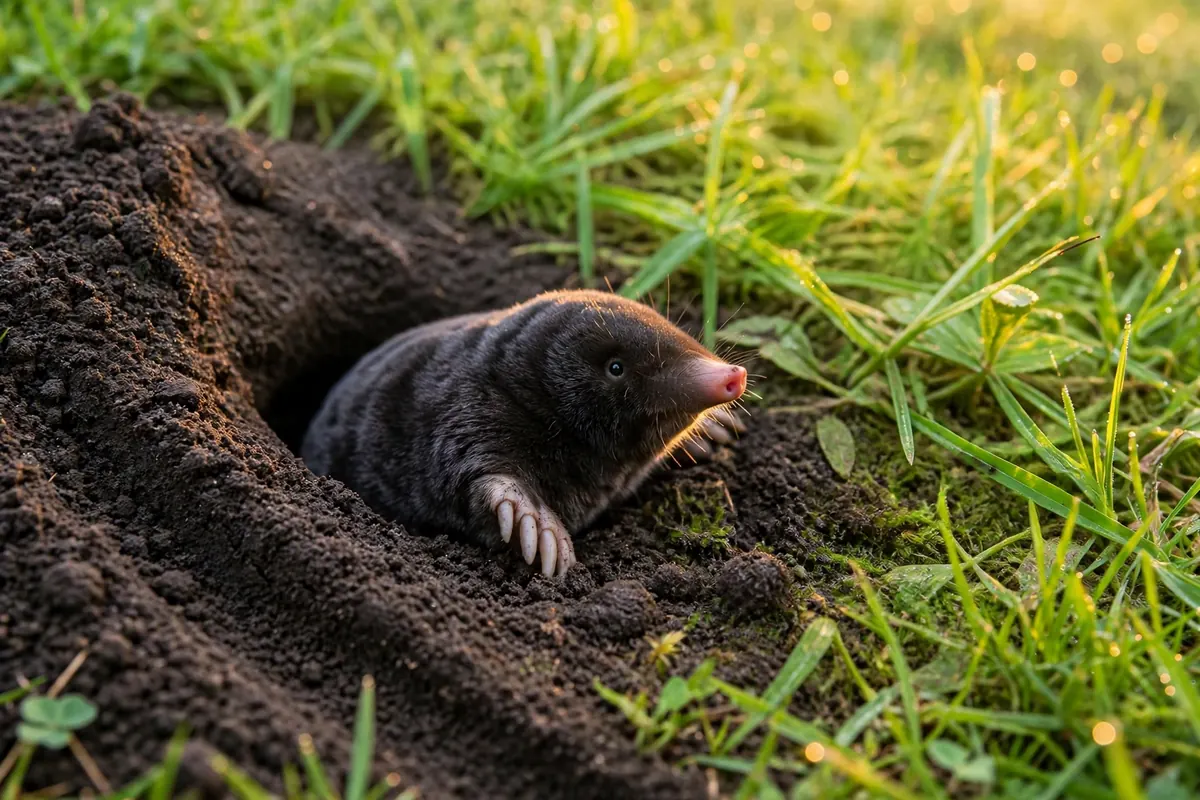
Post Falls East is where the town is growing right now — contemporary Craftsman and farmhouse styles, the 242-home Parkllyn development underway, Tullamore Park and the Highlands Golf Course, all along the Highway 41 and I-90 corridor. For moles, it's a construction zone, and construction zones are opportunities: disturbed soil is the easiest digging anywhere, and every new lawn goes in with heavy irrigation on a builder's timer.
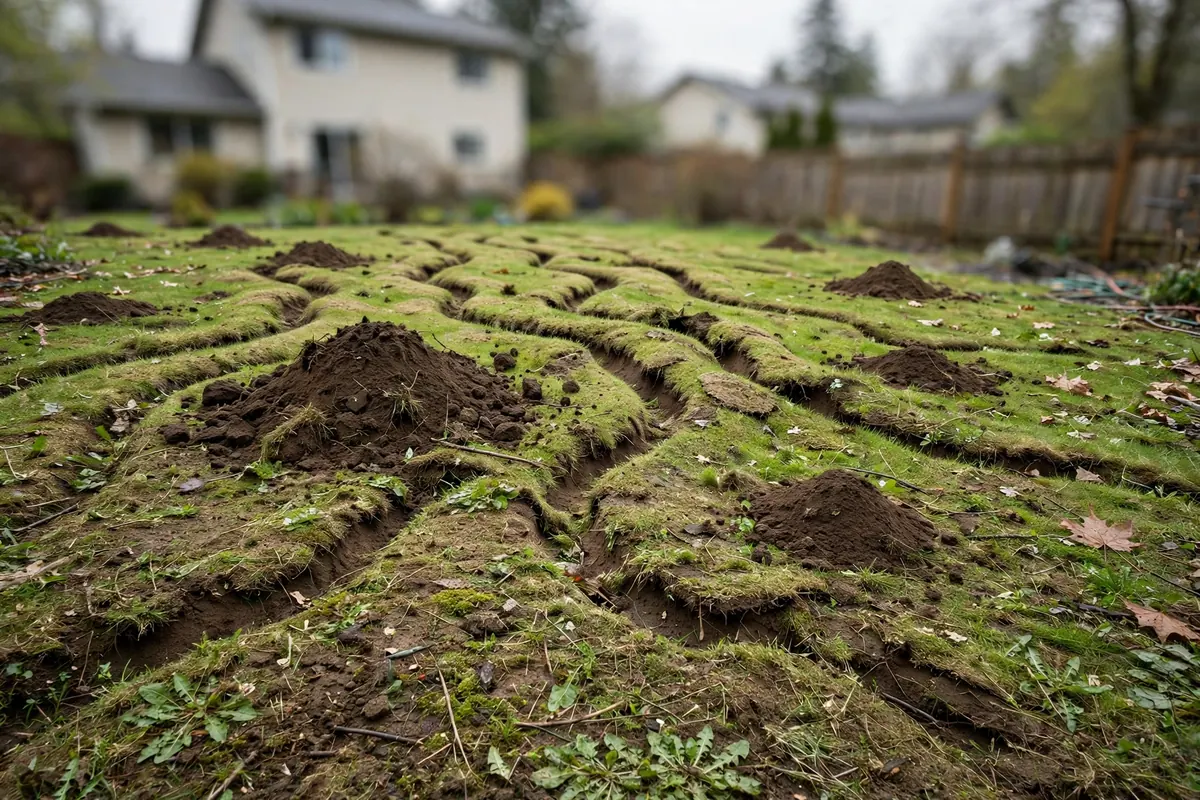
The pattern here is compressed and fast. In established neighborhoods, mole problems develop over years. In Post Falls East, a homeowner can go from "new sod" to "tunnel maze" in a single season. Graded lots, trenches for utilities that were never fully compacted (moles love following old trench lines — they're pre-dug highways), fresh sod watered daily, and surrounding undeveloped parcels supplying a steady stream of dispersing juveniles. It's the North Prairie dynamic turned up a notch by the sheer pace of development.
Construction-disturbed soil
This deserves emphasis because it's the least understood factor. When a lot is graded, the top 12–18 inches become loose, uniform, stone-free digging medium — dramatically easier than undisturbed native soil. Utility trenches for water, sewer, and irrigation create linear loose-soil corridors that moles follow like roads. Even after final grading, these disturbances persist underground for years. A new Post Falls East lawn isn't just attractive to moles; it's structurally easier to tunnel than the native prairie ever was.
The Parkllyn effect and surrounding development
Large active developments mean large areas of disturbed ground in various stages — some graded, some sodded, some still native. Moles displaced by grading don't vanish; they move to the nearest undisturbed ground, which is often the finished lawns of the first phases. Then, as later phases get sodded and irrigated, the population expands back in. It's a rolling wave that follows the construction sequence, and homeowners in early phases sometimes feel like they're being singled out. They're not — they're just first.
The mole control approach is the same proven sequence, but Post Falls East jobs benefit enormously from early intervention. Catching the first mole before it builds an extensive network — before it breeds in March — prevents the exponential version of this problem. If you're seeing the first mounds on a new lawn, that's the moment to act, not next season.

Available in Post Falls East
Mole Control Services in Post Falls East
Mole Control
Complete mole control for Post Falls lawns and gardens — find the tunnels, remove the moles, stop the damage.
Book Mole Control →Mole Trapping
Targeted trapping in active tunnels — the most reliable way to remove moles from lawns and gardens.
Book Mole Trapping →Mole Exclusion
Buried barriers around garden beds and lawns that keep moles from tunneling back in.
Book Mole Exclusion →Dead Mole Removal
Safe pickup and disposal of a dead mole from your yard, garden, or lawn.
Book Dead Mole Removal →Mole Tunnel Repair
Tunnel collapse repair and lawn leveling after mole removal — getting the yard back to mowable shape.
Book Tunnel Repair →Emergency Mole Control
Moles tearing through new sod, a garden, or an irrigation line — call right away.
Book Emergency Mole Control →East Post Falls — Post Falls, ID
Our Approach in Post Falls East
Speed matters more in Post Falls East than anywhere else in town, because the problems compound fast. A single mole on a new lawn in March becomes a breeding pair, becomes a litter, becomes a tunnel network under sod that hasn't rooted yet. We prioritize rapid assessment and same-week trapping for new-construction situations — the cost of waiting is measured in dead sod sections, not just more mounds.
The pre-sod conversation
If you're building or landscaping and the sod isn't down yet, stop and talk to us first. Under-sod mesh exclusion installed on the prepared grade is the highest-ROI mole investment possible — a fraction of the cost of retrofitting, and it protects the lawn during its most vulnerable years. We coordinate with landscapers on timing: mesh goes down after final grade, before sod. One day of work prevents years of problems. See our exclusion page for the details.
Working with builders and HOAs
New developments often have HOA landscaping standards and sometimes shared greenbelts that complicate individual action. We've worked around these: trapping is low-visibility (below-grade sets, no surface disruption beyond the existing tunnels), and we can coordinate with HOA landscape committees on common-area edges where moles cross into private lawns. If your HOA maintains a greenbelt that's the source, that's a conversation worth having — treating only your side of the line is swimming upstream.
Irrigation timers: the builder default
Almost every new Post Falls East home we visit is still running the builder's irrigation program: daily watering, long cycles, year-round. It was set for sod establishment and never changed. Once your lawn is rooted (second season), that schedule is pure mole attractant. We walk through the reprogramming with you — it's a fifteen-minute fix that does more for long-term prevention than any product. Deep, infrequent watering: the grass stays healthy, the surface dries, the worms go deep, and the moles look elsewhere.
Call (208) 925-9460 — if you're in Post Falls East with a new lawn, early action is everything. And if the sod isn't down yet, call before it is. That one call can save you from ever needing the others.
Serving Post Falls East
Serving Post Falls, ID 83854 and nearby Kootenai County communities.
Post Falls East — FAQs
Our new sod is being destroyed by moles. Can it be saved?
Often yes, if you act fast. The danger is tunnels drying out unrooted sod from below — sections can die if the air pockets persist. We trap aggressively while you keep watering (the sod still needs it), and once the moles are out we assess what can recover versus what needs re-sodding. Speed is everything here.
We're building a new home. What should we do about moles before the lawn goes in?
Install under-sod mesh exclusion on the prepared grade before sodding. It's the single most effective mole prevention available, and doing it during construction costs a fraction of retrofitting. Talk to us before final grade — timing matters.
Why does our street have moles but the next one over doesn't?
Construction sequencing. Moles displaced by grading move to the nearest finished ground — usually the earliest-completed phases. As later phases finish and get irrigated, the population spreads. It's not about your street specifically; it's about where each area is in the build-out timeline.
Our HOA maintains the greenbelt behind us and it's full of moles. What can we do?
Talk to the HOA — treating only your side of the line while the greenbelt breeds moles is swimming upstream. We can help make the case: trapping the common area, adjusting its irrigation, or barrier-protecting the boundary. Some HOAs are receptive once they understand the source-sink dynamic.