
Riverside Post Falls — Post Falls, ID
Why Moles Hit Milltown
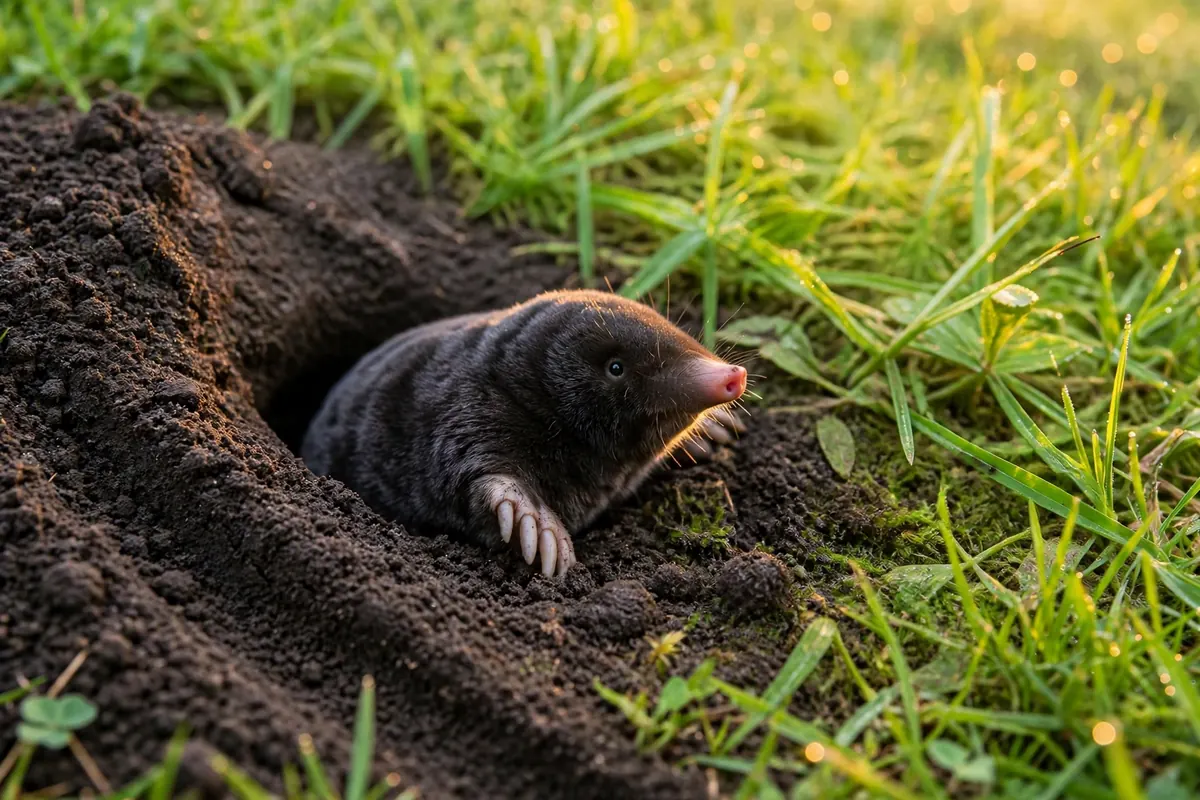
Milltown sits along the Spokane River — and the river is the whole story for moles here. The corridor of Q'emiln Park, Falls Park, Black Bay, and the connecting greenway forms a continuous band of moist, worm-rich, undisturbed ground running right through the neighborhood. It's perfect mole habitat that never gets developed, never gets trapped, and never goes away. Every lawn within a few hundred yards lives next door to a permanent mole reservoir.
The housing stock — Craftsman and cottage homes with mature trees, many on generous lots — adds the second ingredient. Established lawns with deep root zones, consistent irrigation, and decades of soil development. A Milltown yard offers everything a mole wants, sitting directly adjacent to the source population. It's the highest reinvasion-pressure neighborhood in Post Falls, and the management approach has to reflect that reality.
The river corridor effect
Here's the ecology: moles are solitary and territorial, so the river greenway supports a stable, saturated population. Juvenile dispersal every May–June pushes young moles outward from that corridor into surrounding yards — most traveling under 1,000 feet, which covers a lot of Milltown. Remove the moles from your yard and the territory doesn't stay empty long. It's not a flaw in the trapping; it's how territorial vacancy works next to prime habitat.
Waterfront lawns get a double dose: the river keeps soil moisture high even in dry summers, and the riparian zone's organic soils are worm-dense. If your property slopes toward the river or Black Bay, the lower sections are essentially an extension of the corridor habitat. Moles don't respect property lines.
What Milltown damage looks like
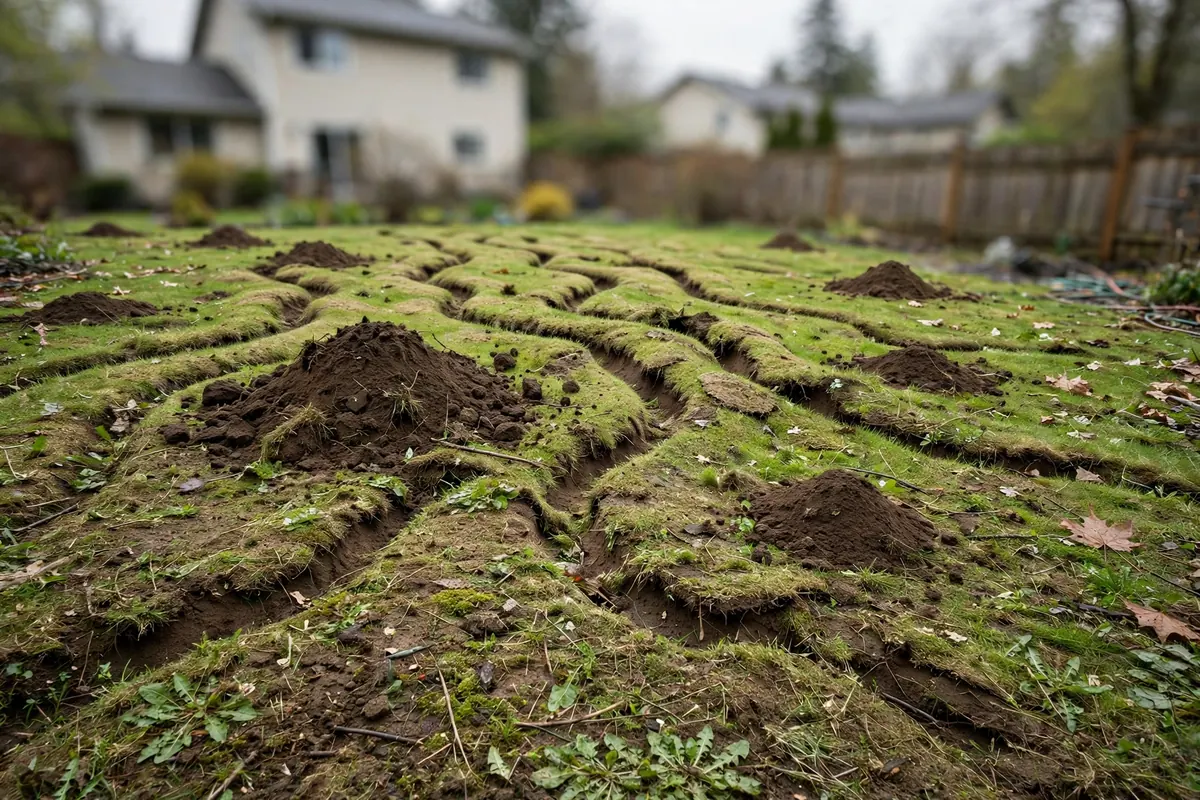
The signature: recurring mounds along the side of the yard facing the greenway or river, fresh activity every spring and fall, and a history of "we dealt with this last year and it's back." Homeowners often assume the previous trapping failed. It didn't — it worked, and then the corridor sent replacements. Understanding this changes the strategy from one-time removal to ongoing management, which is more honest and ultimately more effective.
Our mole control process works the same way here — map active tunnels, trap, repair — but the prevention conversation is different. In Milltown, we talk about the long game: what ongoing monitoring looks like, where barriers make sense (garden beds, new plantings), and how to recognize the early signs so a new arrival gets caught before it establishes an extensive network.

Available in Milltown
Mole Control Services in Milltown
Mole Control
Complete mole control for Post Falls lawns and gardens — find the tunnels, remove the moles, stop the damage.
Book Mole Control →Mole Trapping
Targeted trapping in active tunnels — the most reliable way to remove moles from lawns and gardens.
Book Mole Trapping →Mole Exclusion
Buried barriers around garden beds and lawns that keep moles from tunneling back in.
Book Mole Exclusion →Dead Mole Removal
Safe pickup and disposal of a dead mole from your yard, garden, or lawn.
Book Dead Mole Removal →Mole Tunnel Repair
Tunnel collapse repair and lawn leveling after mole removal — getting the yard back to mowable shape.
Book Tunnel Repair →Emergency Mole Control
Moles tearing through new sod, a garden, or an irrigation line — call right away.
Book Emergency Mole Control →Riverside Post Falls — Post Falls, ID
Our Approach in Milltown
Milltown trapping follows the standard sequence, and it works — the moles currently in your yard get caught like moles anywhere. The difference is what we plan for after. Every Milltown job includes a reinvasion assessment: how close is the nearest greenway, park, or undeveloped river frontage? Which direction will the next moles come from? That determines whether we're talking about a one-time job or a standing arrangement.
Barrier strategy for river-adjacent properties
For yards directly abutting the corridor, we often recommend a hybrid: trap the current population, then install exclusion barriers around the highest-value areas (vegetable gardens, new landscaping, the section of lawn you actually use). A full-perimeter barrier usually isn't practical, but protecting the core while managing the edges with periodic trapping is the realistic long-term answer. See our exclusion page for how barriers work.
Timing with the river in mind
Spring (March–April) is doubly important in Milltown: it's both the pre-breeding window and the start of the dispersal season from the corridor. Trapping in late winter clears the territory before the spring wave arrives. Fall (September–October) is the second window — catching the year's dispersers before they settle in for winter. We can also set up seasonal check-ins: a quick spring assessment (see the seasonal calendar) that catches new arrivals before they've built extensive tunnel systems is far cheaper than a full remediation later.
Call (208) 925-9460 — if you're in Milltown and the moles keep coming back, you're not doing anything wrong. You're next to some of the best mole habitat in Kootenai County. Let's talk about a strategy built for that reality instead of fighting it one mole at a time.
Serving Milltown
Serving Post Falls, ID 83854 and nearby Kootenai County communities.
Milltown — FAQs
We trap the moles every year and they keep coming back. What's wrong?
Nothing's wrong with the trapping — you're next to the Spokane River greenway, which is a permanent mole reservoir. Each spring's juvenile dispersal sends new moles into surrounding yards. The fix isn't better trapping, it's a different strategy: ongoing management, early-spring intervention before dispersers establish, and barriers for high-value areas.
Will a barrier along the river side of my yard work?
It helps significantly for the protected area, though a full-property barrier is rarely practical. The most cost-effective approach is usually barrier-protecting gardens and key lawn sections while managing the rest with periodic trapping. We'll assess your specific layout and give you an honest recommendation.
Are the moles worse because we're near the water?
Yes — riparian soils stay moist through dry summers, and moist soil means earthworms, which means moles. Waterfront and near-river lawns in Milltown consistently show higher activity than yards farther from the corridor. It's the habitat, not anything you're doing wrong.
Should we just learn to live with them?
That's actually a reasonable question for some riverside properties. If the pressure is truly constant and the damage is cosmetic, some homeowners choose tolerance plus basic management. But most people draw the line somewhere — destroyed garden beds, ruined new sod, or a lawn that's more tunnel than turf. We'll help you figure out where that line is and what level of intervention makes sense.