
North Post Falls — Post Falls, ID
Why Moles Hit North Prairie
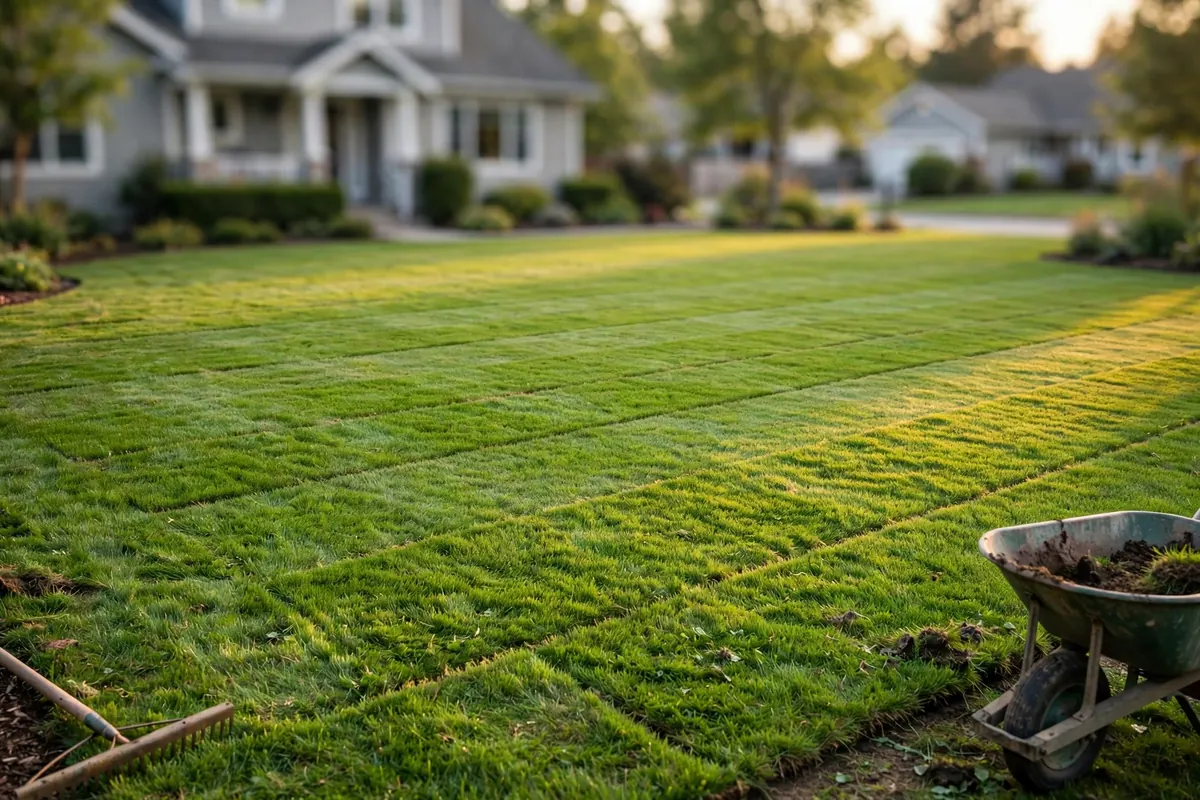
North Prairie is Post Falls' new-subdivision belt — mostly built since 2000, with new-traditional and Craftsman homes on quarter- to half-acre lots, and, as locals put it, "a lot of residential growth within the last couple years." From a mole's perspective, new construction is an opportunity: graded soil is loose and easy to dig, fresh sod is heavily watered, and the landscaping hasn't yet developed the root density that slows tunneling.
The pattern we see in North Prairie is the new-invasion wave. A subdivision goes in, lawns go down, irrigation starts running daily through the first dry summer — and within a season or two, the mounds appear. The moles come from the surrounding open ground: undeveloped parcels, the golf course edges, agricultural land to the north. Graded subdivision soil is simply easier digging than undisturbed native ground, so dispersing juveniles settle there first.
The golf course edge effect
The Club at Prairie Falls golf course and Syringa Park anchor the area's green space — and they're also permanent mole reservoirs. Golf course turf is irrigated, fertilized, and worm-rich year-round: ideal mole habitat that never gets trapped. Moles disperse outward from these reservoirs into surrounding neighborhoods, especially during the May–June juvenile wave. If your North Prairie home backs onto the course or a park, you're on the front line of a replenishing population, not dealing with a one-time invasion.
Irrigation-heavy new lawns
New sod needs frequent watering to establish — and that establishment window coincides exactly with peak mole dispersal season. It's a perfect storm: the most attractive soil conditions at exactly the moment young moles are looking for new territory. Many North Prairie homeowners meet their first mole within months of moving in, which feels like bad luck but is actually predictable ecology.
The fix follows our standard mole control sequence, but North Prairie jobs have a distinctive feature: the tunnel systems are young and simple compared to older neighborhoods. Less mapping, faster trapping, quicker resolution — the trade-off is higher reinvasion pressure from the surrounding open ground. That's a management reality, not a failure, and we're upfront about it.
Available in North Prairie
Mole Control Services in North Prairie
Mole Control
Complete mole control for Post Falls lawns and gardens — find the tunnels, remove the moles, stop the damage.
Book Mole Control →Mole Trapping
Targeted trapping in active tunnels — the most reliable way to remove moles from lawns and gardens.
Book Mole Trapping →Mole Exclusion
Buried barriers around garden beds and lawns that keep moles from tunneling back in.
Book Mole Exclusion →Dead Mole Removal
Safe pickup and disposal of a dead mole from your yard, garden, or lawn.
Book Dead Mole Removal →Mole Tunnel Repair
Tunnel collapse repair and lawn leveling after mole removal — getting the yard back to mowable shape.
Book Tunnel Repair →Emergency Mole Control
Moles tearing through new sod, a garden, or an irrigation line — call right away.
Book Emergency Mole Control →North Post Falls — Post Falls, ID
Our Approach in North Prairie
North Prairie assessments are usually quick — young tunnel systems are easier to read, and the active runs stand out clearly against the simpler network. We map, set two to four traps on verified active runs, and typically see resolution within one to two weeks. The trapping itself is the easy part here.
The conversation that matters: what's next
Because reinvasion pressure is the real story in North Prairie, every job includes a frank discussion about the future. If you back onto the golf course, a park, or open land, new moles will arrive — it's a matter of when, not if. Options range from as-needed trapping (call when mounds appear) to barrier protection for high-value areas. For new sod installations, under-sod mesh before the turf goes down is the single smartest investment — see our exclusion page.
Watering for establishment vs. watering for moles
We won't tell you to underwater new sod — that kills the lawn. But once the sod is rooted (usually the second season), transitioning to deep, infrequent watering makes a real difference. The goal is a lawn that's healthy but not soggy on the surface. Many North Prairie irrigation systems are still on their builder-installed "establishment" schedules years later, running daily out of inertia. Adjusting the timer is free and it's the highest-leverage prevention available.
Call (208) 925-9460 — if you're in North Prairie with a new lawn and new mounds, you're dealing with the most common (and most solvable) mole scenario in Post Falls. We'll get the current ones out and talk through keeping the next ones away. Early action on a new lawn prevents the kind of entrenched tunnel network that takes much longer to resolve later in the season when the system is fully established.
Serving North Prairie
Serving Post Falls, ID 83854 and nearby Kootenai County communities.
North Prairie — FAQs
We just moved into a new North Prairie home and already have moles. Is that normal?
Unfortunately, yes — it's the most predictable pattern in Post Falls. Graded soil, fresh sod, and heavy establishment watering create ideal mole conditions exactly when young moles are dispersing. The good news: young tunnel systems are simple to map and trap, so resolution is usually fast.
Our backyard borders the golf course. Will we always have moles?
You'll always have pressure — golf course turf is a permanent mole reservoir. But pressure isn't the same as infestation. Ongoing management (trapping as needed, possibly barrier-protecting key areas) keeps it controlled. Think of it like weeds: the seed source doesn't go away, but the lawn stays clean with attention.
Should we have installed mesh under our sod?
In hindsight, yes — under-sod exclusion is the best long-term mole prevention for new lawns, and it's far cheaper during construction than after. If you're still in the build phase on any part of the property, it's worth discussing before the sod goes down.
How do we water a new lawn without inviting moles?
You can't fully avoid it during establishment — new sod needs frequent water. But once rooted (second season), switch to deep, infrequent cycles. And check whether your system is still on the builder's daily schedule years later; that inertia is the most common fixable attractant we see.