
West Post Falls — Post Falls, ID
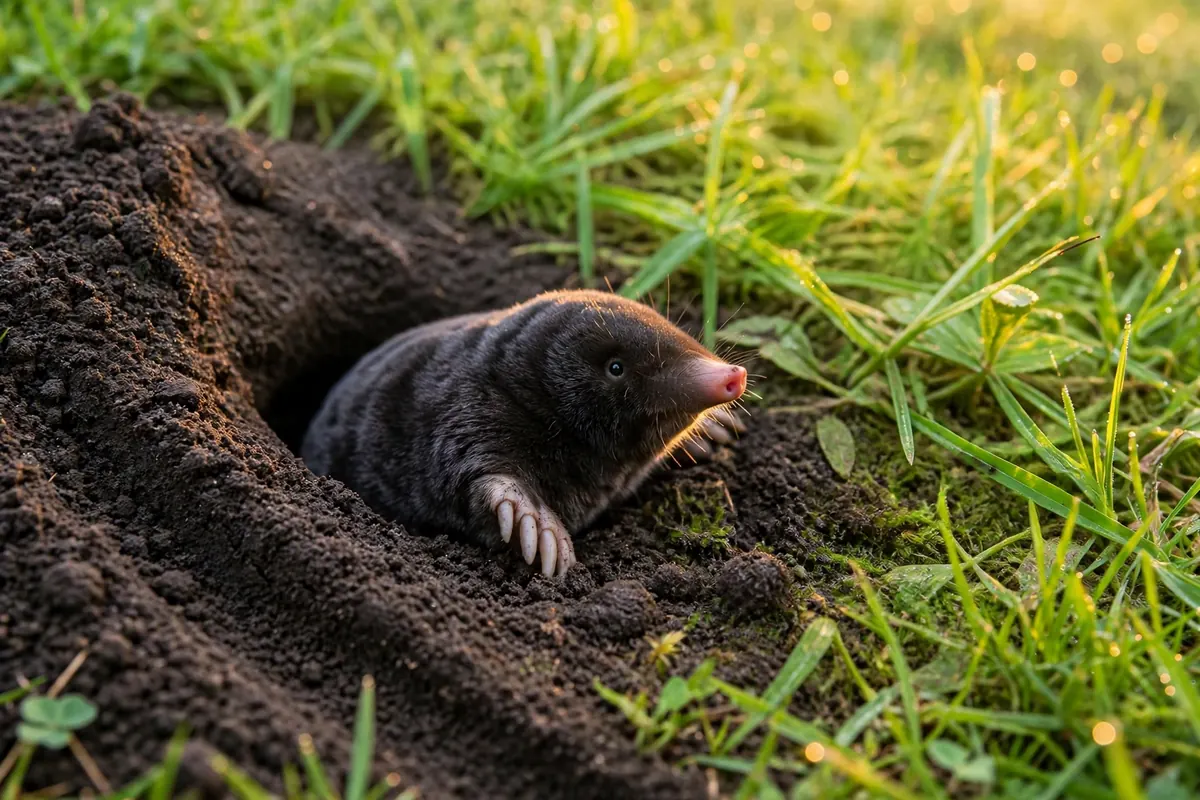
Why Moles Hit West Prairie
West Prairie is Post Falls' rural fringe — spacious homes on large lots, some with farm buildings, stretching toward agricultural ground and open prairie. Corbin Park and the Stateline Speedway mark the area, but the defining feature for moles is what's beyond the back fence: open land. Farmland, pasture, undeveloped prairie — thousands of acres of mole habitat with zero trapping pressure, sitting directly adjacent to residential lawns.
This is the highest reinvasion-pressure setting in Post Falls, for a simple reason: scale. A suburban yard holds one or two moles. The agricultural land next door holds dozens per acre across hundreds of acres. Every dispersal season, every territorial vacancy, every population fluctuation out there sends ripples into the residential edge. West Prairie homeowners aren't dealing with a local mole problem; they're dealing with the edge of a much larger population.
Large lots, large tunnel systems
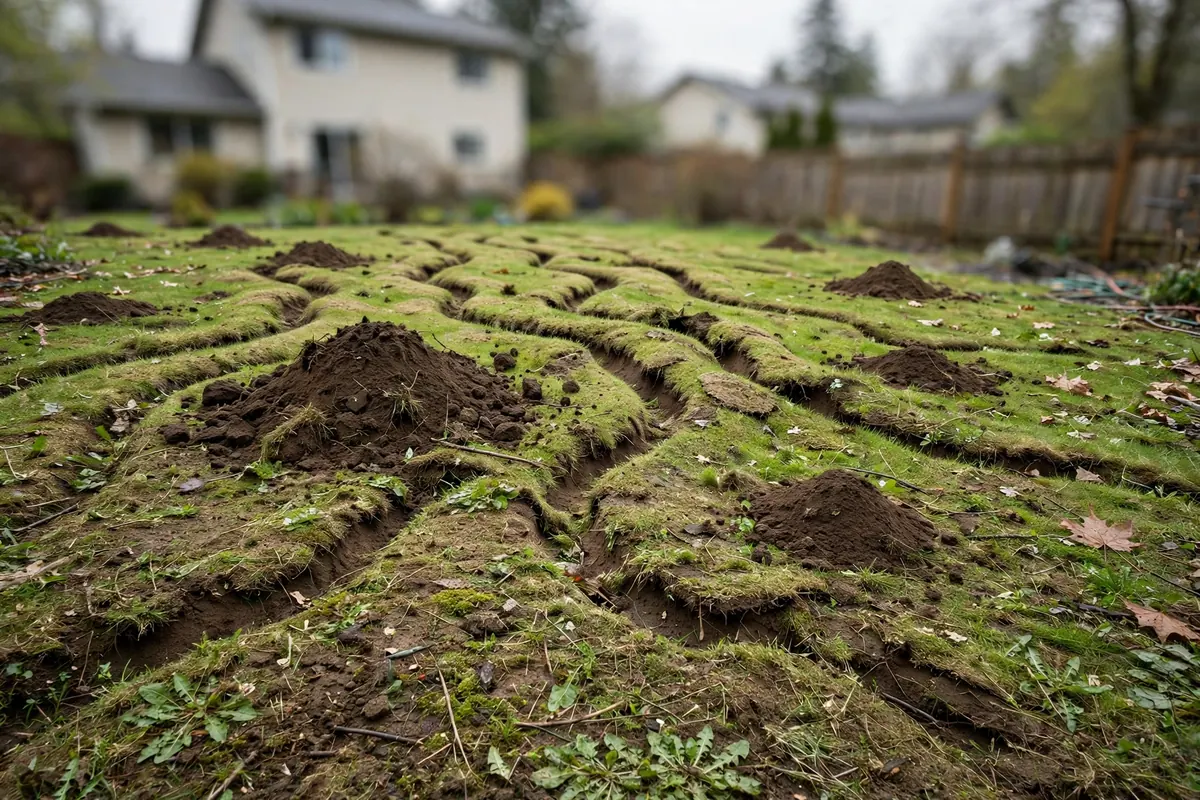
West Prairie's generous lot sizes change the trapping math. A quarter-acre suburban lot might need two to four traps on a handful of runs. A one- or two-acre West Prairie property can have tunnel networks spanning hundreds of feet, multiple active zones, and — occasionally — more than the usual one or two moles, simply because the territory is big enough to support overlapping ranges at the margins. Assessment takes longer, more traps go out, and the timeline extends accordingly.
The farm-edge dynamic
Agricultural edges are mole highways. Irrigated pasture and hay ground stays moist and worm-rich all summer — prime habitat. Field edges, ditch banks, and fence rows concentrate tunnel systems right where residential lawns begin. If your West Prairie property borders active agriculture, the boundary zone is essentially a permanent front line. Moles don't distinguish between the pasture and your lawn; it's all diggable ground.
The practical implication: West Prairie mole control is a management program, not a one-time event. Our standard process — map, trap, repair — works fine for the current population. But the honest conversation is about what comes next: seasonal monitoring, rapid response to new activity, and strategic barriers around the areas you care about most. We'll design the approach around your property's specific exposure rather than pretending one visit solves it permanently.
Available in West Prairie
Mole Control Services in West Prairie
Mole Control
Complete mole control for Post Falls lawns and gardens — find the tunnels, remove the moles, stop the damage.
Book Mole Control →Mole Trapping
Targeted trapping in active tunnels — the most reliable way to remove moles from lawns and gardens.
Book Mole Trapping →Mole Exclusion
Buried barriers around garden beds and lawns that keep moles from tunneling back in.
Book Mole Exclusion →Dead Mole Removal
Safe pickup and disposal of a dead mole from your yard, garden, or lawn.
Book Dead Mole Removal →Mole Tunnel Repair
Tunnel collapse repair and lawn leveling after mole removal — getting the yard back to mowable shape.
Book Tunnel Repair →Emergency Mole Control
Moles tearing through new sod, a garden, or an irrigation line — call right away.
Book Emergency Mole Control →West Post Falls — Post Falls, ID
Our Approach in West Prairie
West Prairie assessments start with the big picture: property size, what's beyond each boundary, where the pressure comes from. A home surrounded by other homes on large lots is a different job from one with pasture on two sides. We map accordingly — and on multi-acre properties, that mapping phase is more involved than a standard suburban visit.
Scaling the trapping
More ground means more traps and more checks. We deploy across the active network proportionally — there's no point setting two traps on a property with six active zones. The 72-hour Idaho check requirement applies regardless, so larger jobs mean more time on site per visit. We'll give you a realistic scope and timeline upfront rather than discovering it mid-job.
The priority-zone strategy
On large rural-fringe properties, we recommend thinking in zones. Zone one: the core — house lawn, garden, areas you use daily. This gets the full treatment plus barrier consideration. Zone two: the middle ground — trap as needed, monitor seasonally. Zone three: the far reaches near the agricultural edge — manage expectations, because this is where the next moles will always come from. Trying to keep a two-acre prairie-edge property mole-free to the fence line is fighting geography. Keeping the core pristine while managing the margins is achievable and sustainable.
For garden beds and high-value plantings in West Prairie, buried barriers earn their keep faster than anywhere else in Post Falls — the reinvasion math makes the upfront cost pay back quickly. And for the irrigation question that always comes up on large lots: yes, dialing back the far reaches while keeping the core lawn healthy is legitimate strategy, not neglect.
Call (208) 925-9460 — tell us about your property size and what borders it. West Prairie jobs reward honest scoping, and we'd rather have that conversation now than halfway through.
Serving West Prairie
Serving Post Falls, ID 83854 and nearby Kootenai County communities.
West Prairie — FAQs
Our property is two acres backing onto farmland. Can you actually keep it mole-free?
Honestly? To the fence line, no — not permanently. The agricultural land next door is a permanent reservoir. What we can do is keep your core areas (house lawn, garden) clean through a combination of trapping and strategic barriers, while managing the margins. It's about priorities, not perfection.
How is mole control different on a large lot versus a suburban yard?
Scale. More ground means more tunnel network to map, more traps deployed, and longer timelines. A standard suburban job might need two to four traps; a multi-acre West Prairie property can need significantly more across multiple active zones. We scope it honestly upfront.
Will the farmer's practices affect our mole problem?
Indirectly, yes. Irrigated pasture is prime mole habitat, so the population next door stays healthy regardless of what you do. Tillage can temporarily disrupt field tunnels and push moles toward undisturbed residential ground. It's not anyone's fault — it's just the edge dynamic of rural-fringe living.
Should we barrier the whole property line?
Usually not the whole line — the cost through Post Falls' rocky soil rarely pencils out for full-perimeter coverage. The sweet spot is barrier-protecting high-value zones (gardens, new lawns, the core yard) and managing the rest with trapping. We'll walk the property and show you where barriers earn their keep.