

MoleGuard — Yards & Lawns
Complete Mole Control for Post Falls Lawns
Mole control isn't one thing — it's a sequence. Find the tunnels. Remove the moles. Repair the lawn. Keep them from coming back. Skip any step and the problem returns, usually within weeks.
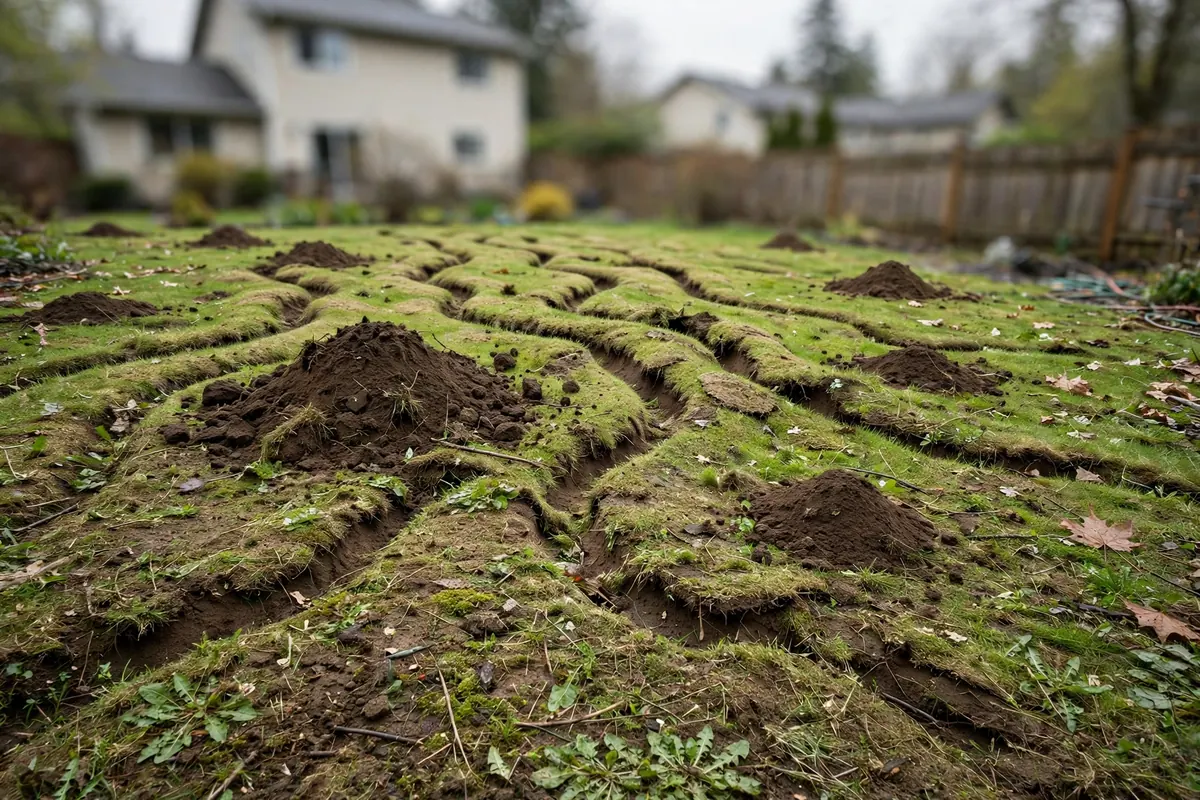
Our process starts with identification, because a surprising number of "mole" jobs turn out to be something else. Voles make surface runways and chew plants. Real mole sign in Post Falls — raised winding ridges, round volcano mounds with a centered plug, no open holes — points to the coast mole, Idaho's only mole species. Getting the ID right determines everything that follows.
Complete Mole Control for Post Falls Lawns: Key Details
- Mapping the tunnel system
A coast mole's territory is a network, not a single tunnel. Shallow feeding runs, one to ten centimeters deep, show as the raised ridges you see on the surface — these get used once or twice and abandoned. Deeper permanent runways, three to twelve inches down, run straighter and get traveled two or three times a day. The deep runs are where trapping works; the shallow ridges are mostly evidence.
We map which is which with the stomp-and-check test: flatten short sections of several runs, mark them, and come back in 24 hours. Repaired sections are active. Straight runs along hard edges — driveways, sidewalks, foundation lines, fence rows — are consistently the highest-percentage trap locations because moles use them as highways between feeding areas.
- Trapping, done the way that works
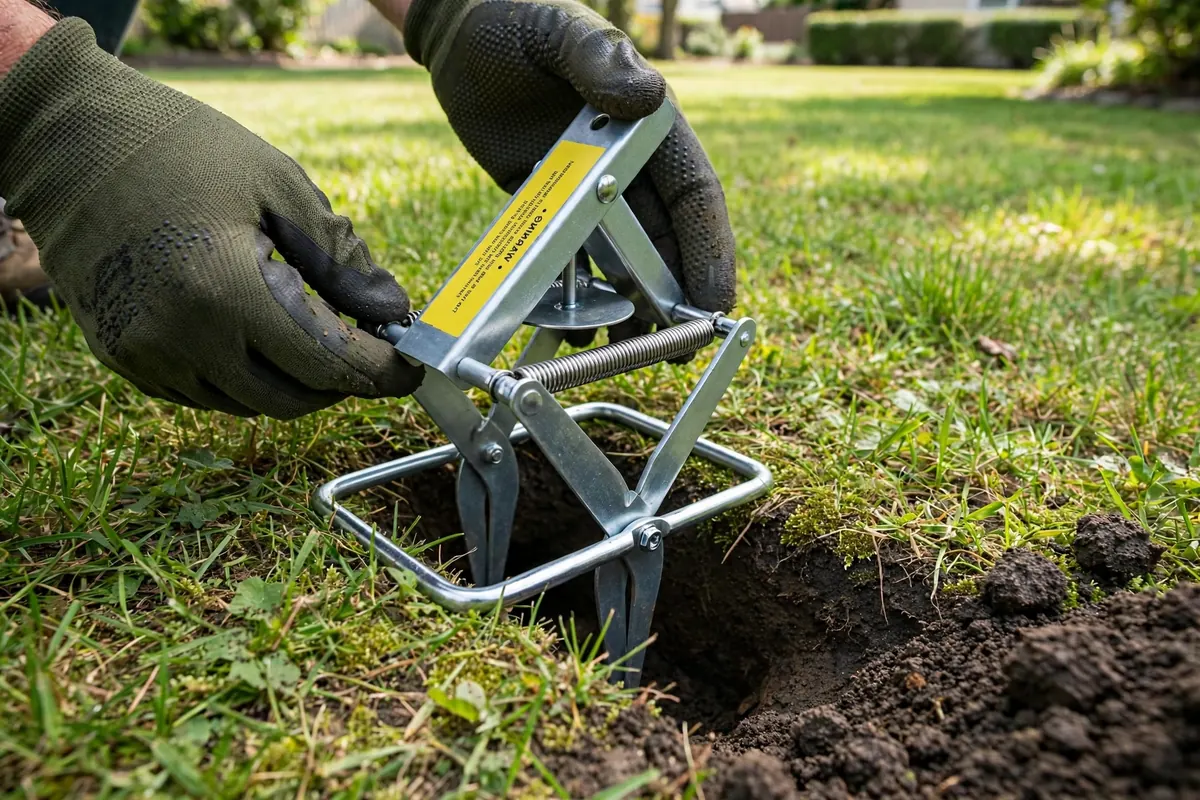
Every university extension service lands in the same place: trapping is the only reliably effective mole control. We set two to four traps across the active network, using scissor-jaw or choker traps placed in line with the tunnel, all light excluded, trigger pans seated on compacted soil. Harpoon-style traps work too but sit above ground, so we favor below-grade sets in yards with kids or pets.
Then we check every two to three days — Idaho requires trap checks at least every 72 hours. A trap that hasn't caught in two or three days gets moved; it's on the wrong tunnel. And remember: a typical Post Falls yard holds one or two moles. When the new mounds stop appearing, the territory is empty.
- What trapping won't do alone
Trapping removes the current moles. It doesn't change why they came. Post Falls lawns sit on Rathdrum Prairie silt loam — diggable, worm-supporting soil — and summer irrigation turns them into an oasis of moist, earthworm-rich ground. We see this pattern across all Post Falls neighborhoods we serve. A mole eats 60 to 80 percent of its body weight daily, nearly all earthworms. As long as the lawn stays that attractive, the next dispersing juvenile will find the empty tunnels.
That's why every job ends with the prevention conversation: dialing back overwatering so the top few inches dry out, and — for garden beds and high-value areas — a buried hardware-cloth barrier. See our mole exclusion page for how that works.
Dealing With Mole Control?
Call MoleGuard — tell us what you're seeing and we'll take it from there.
MoleGuard — Yards & Lawns
The Honest Timeline
Most residential mole jobs resolve in one to three weeks of active trapping. That's not a guarantee — it's what the biology supports. One or two moles, multiple traps on verified active runs, checks every few days. When catches stop and no new mounds appear for a week, the territory is clear.
What stretches timelines: misidentification (trapping for moles when it's voles), trap-shy moles that have sprung badly set DIY traps before, and reinvasion from adjacent open space. Yards backing onto the Spokane River greenway, farmland, or undeveloped lots face constant pressure — new moles arrive as fast as old ones leave. In those spots, we talk frankly about ongoing monitoring rather than one-and-done.

The Honest Timeline: Key Details
- Seasonal timing matters
The best windows in North Idaho are late winter through spring (February to April) and fall (September to October). Spring is prime: the ground has thawed, moles are working near the surface, and trapping before the March–April litters arrive means dealing with one animal instead of four. Fall runs are heavily traveled as moles feed intensively before winter.
Frozen ground from roughly December through February makes trapping impractical — there's no surface activity to read. Dry midsummer pushes moles deep below the baked crust; they're still there, just not catchable near the surface. If you call in January, we'll tell you honestly whether starting now or waiting for the thaw gets better results.
- What we won't sell you
Vibrating stakes, ultrasonic repellers, castor oil granules, Juicy Fruit gum, coffee grounds, mothballs, flooding the tunnels with a hose — we've read the same internet lists you have, and we've read the university research behind them. None of these hold up. Castor oil showed limited, weeks-long reduced activity in one small 1990s trial and inconsistent results everywhere else. Mothballs are illegal to use off-label and toxic. Grub control doesn't evict moles because earthworms, not grubs, are the main food — and killing grubs can make tunneling worse as moles search harder.
We don't sell any of it. Trapping works. Everything else is either unproven, temporary, or a distraction from the method with actual evidence behind it. If you'd rather try the DIY route first, our mole trapping page explains what the pros do differently — and our blog walks through the active-tunnel test step by step.
Mole Control — FAQs
How long does mole control take?
Most residential jobs resolve in one to three weeks of active trapping. A typical Post Falls yard holds one or two moles, and with multiple traps on verified active runs, catches usually come quickly. Timelines stretch with reinvasion pressure from adjacent open space — river greenway, farmland, or undeveloped lots.
Will the moles come back after treatment?
They can. Moles are territorial, so empty tunnels invite newcomers — especially during May–June juvenile dispersal. Lasting results need removing the current moles plus addressing the attractant (usually overwatering) and, for high-value areas, a buried barrier.
Is mole control safe for my dog and kids?
Yes, when done right. We favor below-grade scissor and choker traps with all light excluded — nothing sitting exposed on the surface. Above-ground harpoon traps are effective but we avoid them in yards with children or pets. We also steer clear of bait products: worm-mimic baits carry labels warning they're extremely toxic to mammals, and dogs that dig are exactly the wrong audience.
Do I need mole control, or will they leave on their own?
They won't leave on their own. A mole's territory is a productive feeding ground — as long as the lawn stays irrigated and worm-rich, there's no reason to go. And one mole becomes more: coast moles breed January through March, with litters of three or four born March to April. Dealing with one animal in February beats dealing with four in May.
Can you guarantee the moles won't return?
No — and you should be wary of anyone who does. What we can do is remove the current moles, repair the damage, and set up prevention that makes reinvasion much less likely. Yards next to open space will always face some pressure, and we're upfront about that rather than promising what biology won't allow.