
MoleGuard — Lawn Recovery
Getting Your Lawn Back After Moles
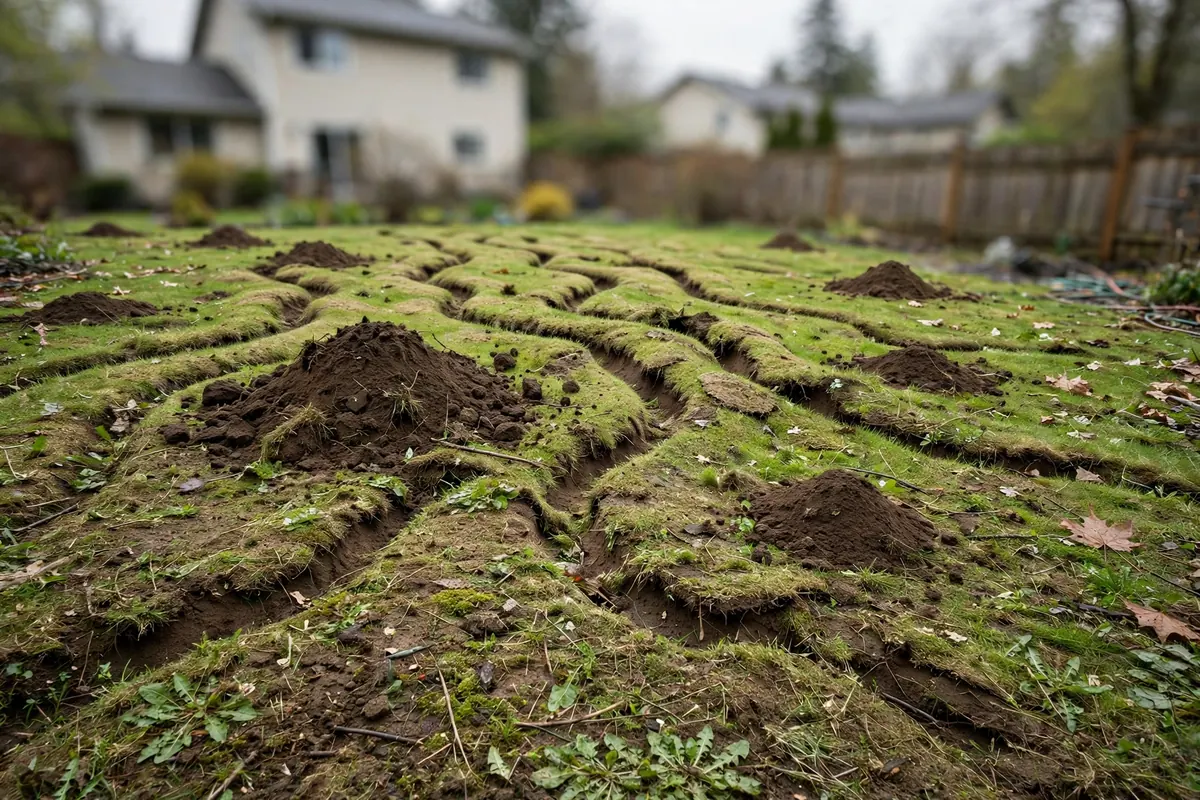
The moles are gone. The lawn looks like a battlefield. Now what? Mole tunnel repair is the part of the job nobody talks about — the trapping gets the attention, but the collapsed ridges, sunken runs, and dead patches are what you're actually living with. Left alone, mole damage doesn't just look bad; it gets worse. Collapsed tunnels create low spots that hold water, torn-up root zones leave thin grass that weeds colonize, and an uneven lawn is a mower-scalping, ankle-turning mess.
The good news: lawns recover well from mole damage if the repair is done right. The bad news: "done right" has a specific sequence, and most of the quick fixes people try — just mowing over it, dumping a bag of topsoil on the mounds — either don't work or create new problems.
Getting Your Lawn Back After Moles: Key Details
- Step one: flatten and settle
First, the raised ridges get knocked down and the mounds get scattered — not hauled away, scattered. That mound soil is your own topsoil, already the right type for your lawn; removing it just creates low spots. We use the back of a rake or a lawn roller to press ridges flat, working when the soil is slightly moist (not wet, not bone dry). Rolling a dry lawn does almost nothing; rolling mud creates compaction.
Then — and this is the part people skip — you wait. Collapsed tunnels keep settling for a few weeks as soil fills the voids. Repairing on day one and seeding on day two means doing it twice. We let the ground tell us when it's done moving, usually two to four weeks depending on rain and irrigation.
- Step two: fill the lows
Once settling stops, the sunken runs and low spots get topdressed — a thin layer (quarter to half inch) of quality topsoil or a sand-compost mix, worked into the existing grass with the back of a rake. The key word is thin. Burying grass under two inches of soil kills it; building up gradually over two or three applications lets the existing turf grow through. Patience here saves a full reseed later.
- Step three: reseed the dead zones
Where tunnels destroyed the root zone completely — you'll see brown, dead strips following the old run lines — overseeding is needed. Rake the area to expose soil, spread a sun/shade-appropriate grass seed for North Idaho (a Kentucky bluegrass / perennial ryegrass / fine fescue blend suits most Post Falls lawns), press it in with light rolling, and keep it consistently moist until germination. Fall (September) is the ideal seeding window here; spring works too but competes with weeds.
One caution: don't seed until you're confident the moles are actually gone. There's nothing more demoralizing than watching fresh mounds erupt through new seedlings. We verify a full week with no new activity before the repair phase starts — that's built into our mole control sequence, not an add-on.
Dealing With Mole Tunnel Repair?
Call MoleGuard — tell us what you're seeing and we'll take it from there.
MoleGuard — Lawn Recovery
What Repair Can't Fix (and What Prevents Repeat Damage)
Let's be honest about limits. Tunnel repair fixes the lawn. It doesn't fix why the moles came. If the underlying attractant — usually an overwatered, earthworm-rich lawn on diggable Rathdrum Prairie soil — hasn't changed, you're repairing for the next mole, not the last one. Every repair job we do ends with the prevention conversation, because a beautiful newly-leveled lawn is exactly as attractive to the next dispersing juvenile as the old one was.

What Repair Can't Fix (and What Prevents Repeat Damage): Key Details
- The irrigation adjustment
Post Falls summers are dry — July and August see very little rain — so irrigation isn't optional for a green lawn. But there's a wide gap between "enough water for grass" and "soggy enough for maximum earthworm density in the top two inches." Deep, infrequent watering (an inch once or twice a week, early morning) keeps grass roots growing deep while letting the surface dry between cycles. Worms follow moisture downward; moles follow worms. You're not trying to eliminate worms — just making the top few inches less of a 24-hour buffet.
- When repair reveals a bigger problem
Sometimes what looks like mole damage turns out to be something else once we start working. Extensive surface trails with no mounds after snowmelt? Probably voles, and they need a different approach. Spongy ground that collapses in sheets? Could be a failing irrigation line saturating the soil — which, incidentally, is also why the moles are there. We'll tell you what we're seeing rather than just smoothing it over.
- New sod and construction zones
Post Falls East and North Prairie are full of new lawns, and new sod on graded soil is the highest-risk scenario — soft, loose, heavily watered. If your new lawn is getting tunneled before it's rooted, the urgency is higher: tunnels under unrooted sod can kill sections outright as turf dries over air pockets. And if you're still in the construction phase, ask about under-sod mesh exclusion — dramatically cheaper before sod goes down than after.
The bottom line: mole damage looks worse than it is. A proper flatten-fill-seed sequence brings back even heavily tunneled yards within a season. What doesn't work is repairing on top of an active infestation — moles out first, verified quiet for a week, then repair. No shortcuts.
Mole Tunnel Repair — FAQs
Will my lawn recover on its own after the moles are gone?
Partially, but slowly and unevenly. Collapsed tunnels leave permanent low spots, and dead strips often get colonized by weeds first. Active repair — flattening, topdressing, overseeding — gets you a level lawn in one season instead of two or three patchy years.
Should I remove the molehills or spread them out?
Spread them. That mound soil is your own topsoil — hauling it away creates low spots. Scatter with the back of a rake, then roll flat. Only exception: mounds on hardscapes, where the soil has to go elsewhere.
How long should I wait before reseeding?
Until the ground stops settling — usually two to four weeks after the last activity. Don't seed until the moles are confirmed gone; fresh mounds through new grass is heartbreaking.
What's the best grass seed for repairing mole damage in Post Falls?
A North Idaho blend: Kentucky bluegrass with perennial ryegrass and fine fescue covers most conditions. Match what's already there — a ryegrass patch in a bluegrass lawn always looks off. September is the ideal seeding window.
My lawn feels spongy and collapses when I walk on it. Is that normal after moles?
Extensive shallow tunneling can leave the top few inches honeycombed. Rolling and topdressing firms it up, but if large areas collapse in sheets, have the irrigation checked: a leaking line saturates soil, which weakens the ground and attracts moles in the first place.
Can I just mow over the ridges and ignore it?
You can, but ridges don't go away — they mat down and the mower scalps the high spots while missing the lows. Over a season you get an uneven, weedy lawn. An hour with a rake and roller in spring does more than a summer of mowing over it.