
MoleGuard — Urgent Help
When Mole Damage Can't Wait
Most mole problems develop over weeks — a ridge here, a mound there, gradually getting worse. But some situations can't wait for the normal scheduling queue. Fresh sod getting tunneled before it's rooted. A wedding or graduation party in the backyard next weekend with the lawn looking like a minefield. An irrigation line chewed through or undermined. A real estate listing going live with the yard at its worst. These are the calls where "we'll get to you next week" isn't good enough.
Here's what emergency mole control actually means, honestly: it doesn't mean moles die faster — trapping biology doesn't speed up. What it means is priority response. We come out fast, assess immediately, get traps on the active runs the same day, and compress the normal sequence. For situations where the damage itself is the emergency (not just the animal), we can also do rapid triage on the lawn — flattening, emergency leveling — while trapping runs in parallel.
When Mole Damage Can't Wait: Key Details
- The new-sod emergency
This is the most time-critical scenario we see. Fresh sod on graded, heavily watered soil is the single most attractive mole habitat in Post Falls — and unrooted sod has no root system to hold it together. Tunnels under new sod don't just look bad; they can kill large sections outright as the turf dries out over air pockets. Every day matters. We trap aggressively (more traps, more of the network covered) and advise on watering adjustments that keep the sod alive while making the top inches less inviting.
If you're still pre-sod, by the way, stop and read our exclusion page — under-sod mesh installed now prevents this entire category of emergency. It's the cheapest insurance in mole control.
- The event deadline
Backyard wedding in ten days and the lawn just erupted? We can't make moles vanish overnight, but we can make a dramatic difference fast. Priority trapping starts day one. Meanwhile, cosmetic triage — flattening ridges, scattering mounds, rolling — can take a lawn from "disaster" to "presentable" in a single visit even while trapping continues underneath. It's not the full repair sequence (that needs the moles gone first), but it gets you through the event.
- Irrigation and structural concerns
Moles don't eat pipes, but their tunnels undermine them. Shallow irrigation lines can crack or separate when the soil around them collapses; we've seen zones go dry because a mainline shifted in a tunnel void. Tunnels along foundations are almost never a structural threat — moles don't dig deep enough or remove enough soil — but tunnels directing water toward a foundation during a heavy rain are worth addressing. If you suspect line damage, we coordinate: trap the moles, then you (or your irrigation tech) fix the line on stable ground.
Dealing With Emergency Mole Control?
Call MoleGuard — tell us what you're seeing and we'll take it from there.
MoleGuard — Urgent Help
What to Do Right Now
If you're dealing with urgent mole damage, here's what helps in the next 24 hours versus what needs a professional.

What to Do Right Now: Key Details
- Do this today
Flatten what's raised. Knock down ridges and scatter mounds with the back of a rake. This doesn't fix anything, but it stops the damage from looking worse, prevents mower damage, and — usefully — gives you a clean baseline: any new ridges tomorrow morning are fresh activity, which tells us (or you) exactly where the mole is working right now.
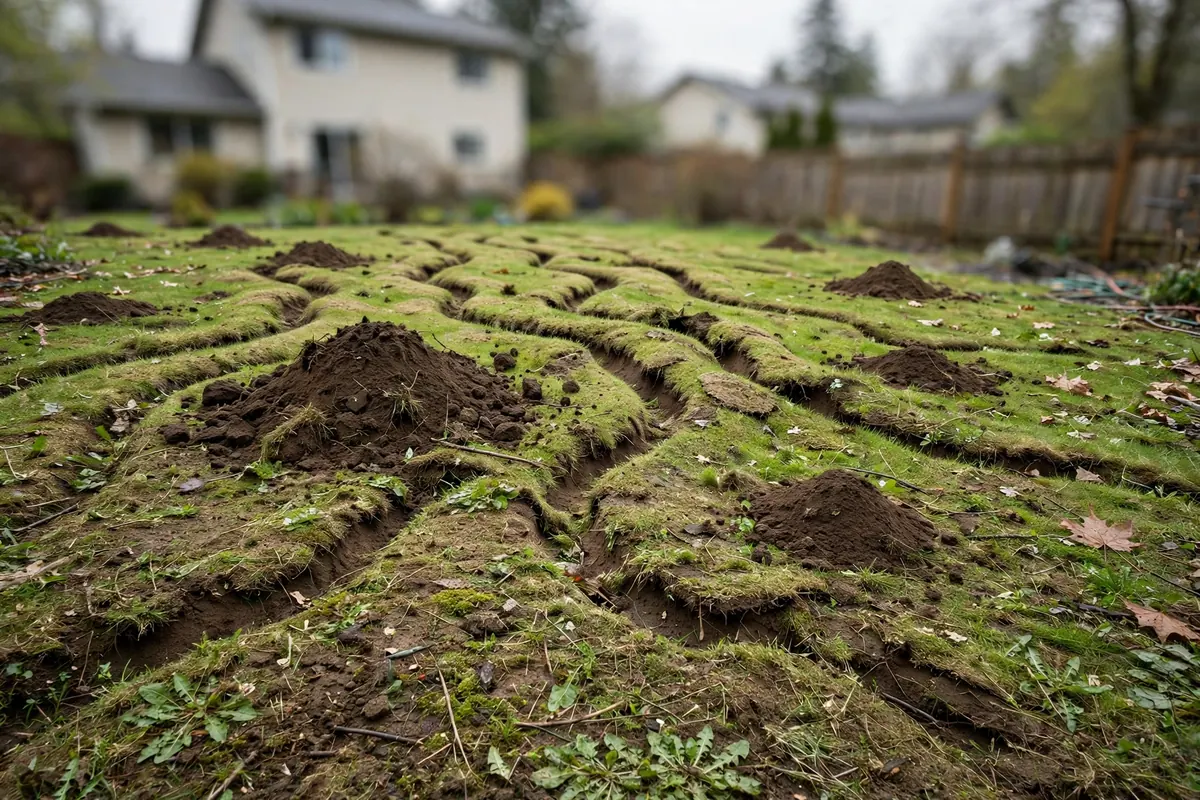
Photograph everything. Wide shots of the yard showing the pattern, close-ups of mounds and ridges. If you call us, these help enormously — we can often read the tunnel system from photos before we arrive. If it's voles rather than moles (no mounds, just surface trails), the photos tell us that too.
Don't flood, don't poison, don't panic-buy. The garden-hose flood only works on tiny new systems and risks your foundation. Poison baits don't work on moles (they eat worms, not grain) and endanger pets. Vibration stakes and repellents won't help on any timeline, let alone an urgent one. Save the money.
- What we'll do on the emergency visit
Same-day or next-day arrival. Full yard reading — tunnel mapping, activity verification, identification confirmation (we've had "emergency mole" calls turn out to be voles, gophers, and once a broken sprinkler head). Traps go on verified active runs immediately — more of them than a standard visit, covering more of the network. We set the check schedule (every two to three days) and give you the honest timeline: what's achievable this week versus what takes the normal course.
For event deadlines, we layer in cosmetic triage the same day. For new sod, we talk watering strategy before we leave. For suspected irrigation damage, we mark the tunnel zones so your irrigation tech knows where to look. The emergency isn't just about speed — it's about sequencing everything correctly under time pressure.
Call (208) 925-9460 and tell us what's happening and when you need it resolved. If it's genuinely time-critical, say so — we'll tell you straight whether we can meet the deadline. And if your situation isn't actually urgent, we'll say that too and put you on the normal schedule. Our standard mole control process handles everything else.
Emergency Mole Control — FAQs
How fast can you get here?
Call and tell us what's happening — for genuine time-critical situations (new sod under attack, event deadlines, suspected line damage) we prioritize same-day or next-day response across our Post Falls service area. Routine mole activity goes on the normal schedule, which is usually within a few days.
Can you get rid of the moles before my event this weekend?
Honestly: trapping takes the time it takes — biology doesn't negotiate. But we can make a dramatic cosmetic difference in one visit (flattening, leveling, mound cleanup) while trapping runs underneath. For a weekend deadline, call at the start of the week, not the day before.
My new sod is being destroyed. Is it too late?
Not necessarily, but every day counts. Unrooted sod over active tunnels can die in sections as turf dries over air pockets. We trap aggressively and advise on watering that keeps sod alive while discouraging surface tunneling. And for next time: under-sod mesh before installation prevents this entirely.
Is a mole emergency actually dangerous?
Almost never in the way people fear. Moles don't threaten foundations (they don't dig deep enough), don't bite people, and aren't aggressive. The real urgencies are: new sod dying, events, irrigation damage, and — rarely — tunnels channeling water toward foundations in heavy rain. Everything else can wait for the normal queue.
Should I try anything myself before you arrive?
Flatten the ridges and scatter the mounds (gives us a clean baseline for fresh activity), take photos of the damage pattern, and don't buy repellents or poisons — they won't help and some endanger pets. If you want to try the activity test yourself, our blog walks through the stomp-and-check method.
Do you charge extra for emergency visits?
We'll discuss timing and scope when you call — what matters is matching the response to the actual urgency. A new-sod crisis and a few spring mounds are different situations, and we schedule them accordingly. No surprises.
Need Emergency Mole Control?
Call MoleGuard and describe what you're dealing with.